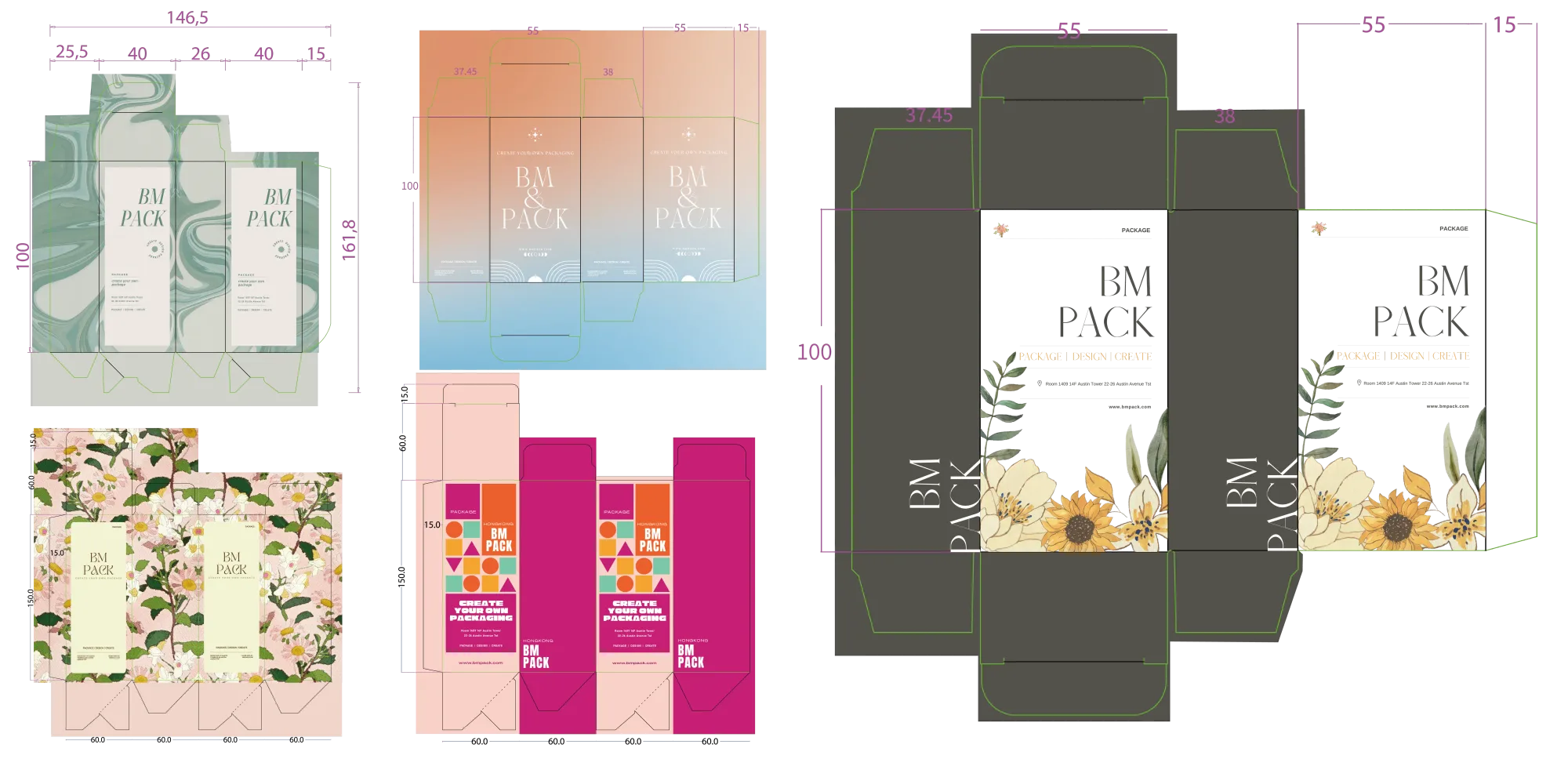
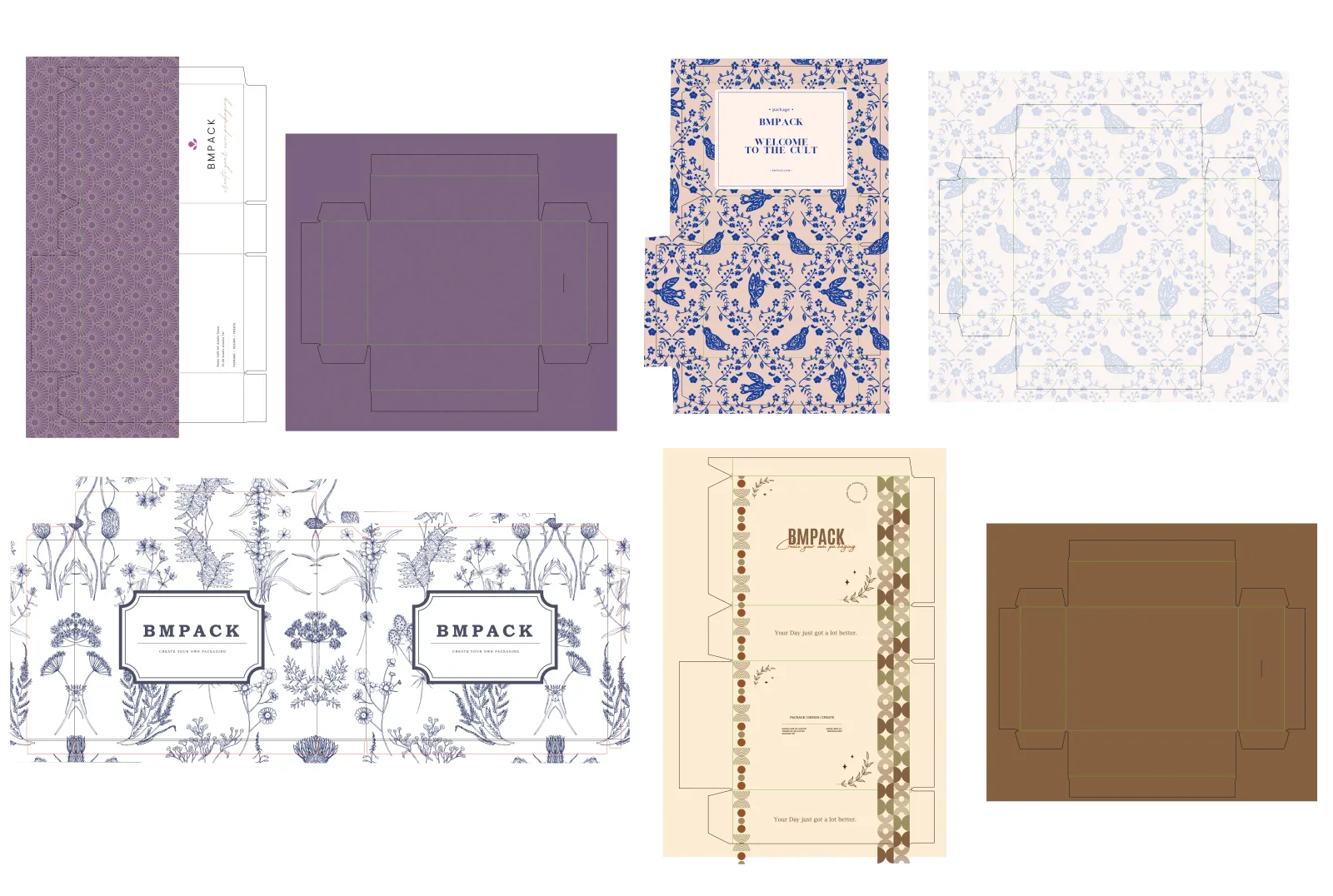
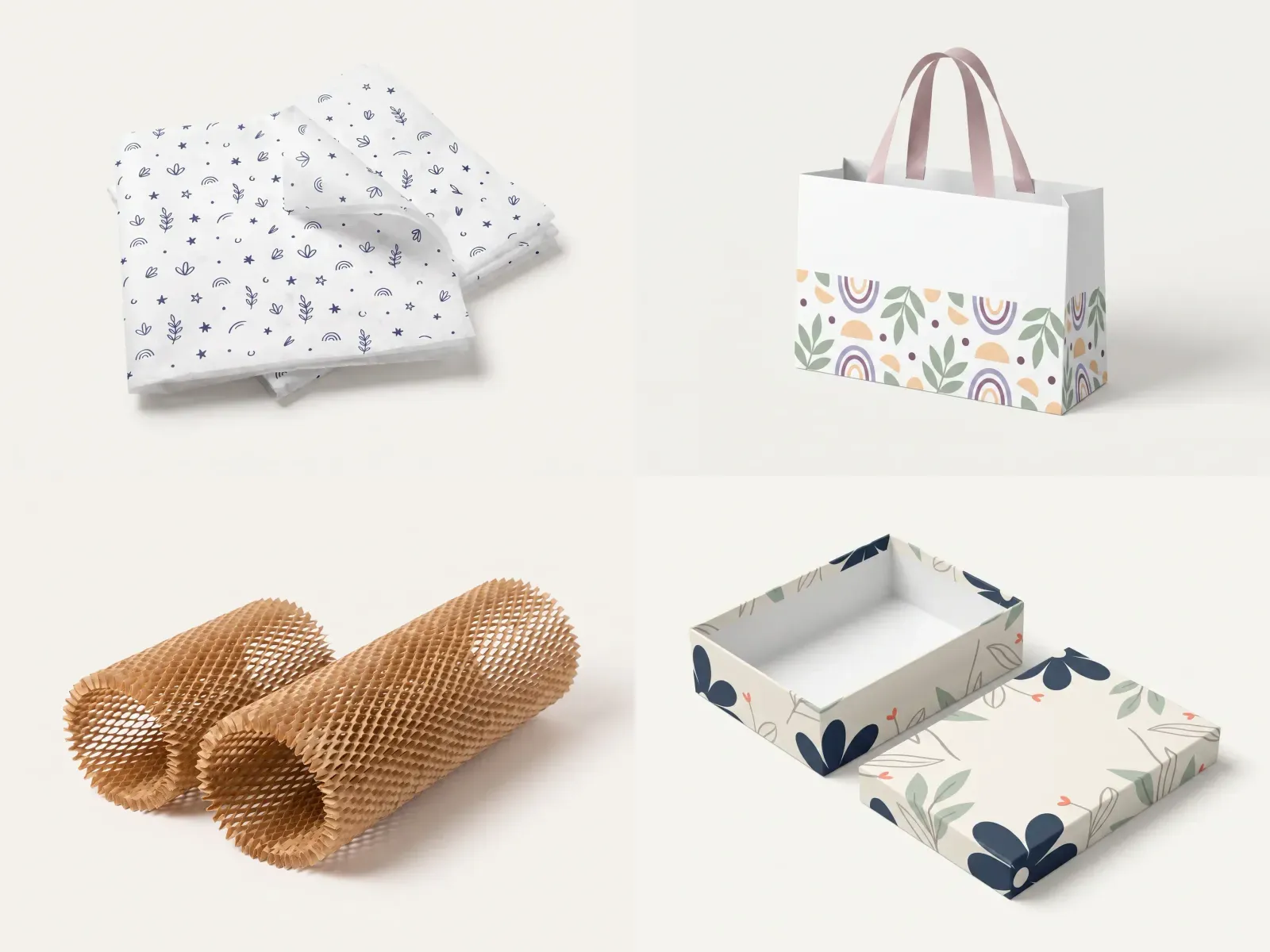
Sustainable packaging is three decisions, not one: the paper, the plastic inside the box, and the size of the box. They are independent, and two of the three usually save money.
What follows is what our own factory can actually supply, and where the limits are. Nothing here needs a marketing claim to be true.
The three decisions
- The paper
- FSC-certified or recycled content, confirmed batch by batch.
- The plastic
- Paper inserts, honeycomb and paper tape replace most of it.
- The size
- A box that fits the product and the sheet wastes the least.
- The claim
- Only print what the batch can actually support.
Ask for these at quote time, not after artwork. Stock availability is decided when the paper is bought.
What the FSC label actually certifies
FSC certifies forest management and the chain of custody that follows: that the fibre came from a responsibly managed forest, and that every company handling it in between was audited. It says nothing about how recyclable the finished box is, or how much ink is on it.
The label comes in three forms: FSC 100%, FSC Mix and FSC Recycled. Mix is the one most packaging carries. BM Pack is certified, so the mark can go on your box with our licence code — as long as that run is printed on certified stock, which is why we settle it at quote time rather than at artwork.
Tip: Ask for the certified option early: it is a paper-buying decision, and paper is bought before the job goes on press.
Printing the FSC logo on your box: size, licence code and whose name goes on it
The mark is not a graphic you drop into artwork. FSC publishes the rules in FSC-STD-50-001, the standard for certificate holders; the current version is V2-1, in force since 31 May 2021. Four of its clauses decide most jobs: how small the mark may go, what has to sit beside it, where the artwork comes from, and whose licence code ends up on the box.
Size is what designers ask first. The on-product label may go down to 9 mm wide in portrait or 6 mm high in landscape, and FSC recommends 17 mm and 12 mm respectively (8.5). The logo on its own may not drop below 6 mm high, with 10 mm recommended (8.9). Above all of that sits one binding rule: every element has to stay legible, so on a small panel the recommended size is the safer brief. On a 60 mm box face, the smallest portrait label takes about a seventh of the width.
Your FSC licence code, the C###### number, has to accompany any use of the mark; once per product or per piece of promotional material is enough (1.3). The ® symbol goes in the upper right of the mark wherever the trademark is registered, and the first or most prominent "FSC" in your text carries it too (1.4).
You cannot redraw the mark or pull one off a search engine. Only artwork from FSC's trademark portal, or artwork issued or approved by your certification body, may be used, and access to that portal is arranged by the body (3.4). Before anything goes to print you either hold an approved trademark use management system or send each intended use to your certification body for approval (1.5), and the product itself has to sit inside your certificate scope (1.6).
Colour is fixed as well. The green is Pantone 626C or its closest approximation, with black-and-white positive and negative versions available; only where the print area cannot carry those may another colour be used, and then it has to give legible contrast on a solid background (8.2, 8.3). An FSC mark in your brand colour is not an option.
Then the question we are actually asked: whose code goes on the box. If both companies are certified, a supplier may label with the buyer's licence code, provided the product sits inside both certificate scopes, both parties tell their certification bodies in writing and name who approves the on-product labels, and the supplier uses that code only on the goods it supplies to that buyer (4.8). If you are not certified yourself, the label carries the printer's code, and what you may then say in your own marketing is a separate conversation with the certification body.
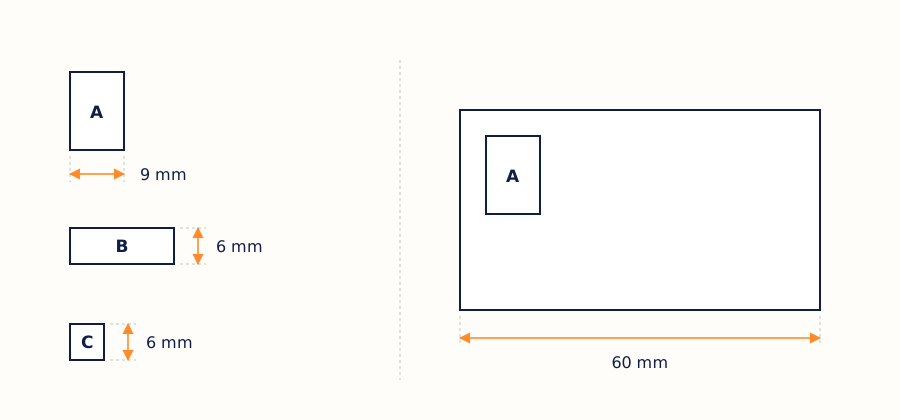
| What is printed | Minimum | Recommended |
|---|---|---|
| On-product label, portrait | 9 mm wide | 17 mm wide |
| On-product label, landscape | 6 mm high | 12 mm high |
| FSC logo on its own | 6 mm high | 10 mm high |
FSC-STD-50-001 V2-1, clauses 8.5 and 8.9. The binding rule is legibility: if an element cannot be read at the size you have chosen, the size is wrong whatever the table says.
Tip: These figures come from FSC-STD-50-001 V2-1. The standard is revised from time to time, so confirm the current version and your own requirements with your certification body before you print.
Tip: Decide where the label sits at dieline stage, not at artwork. A 17 mm label needs a flat panel that no fold or glue flap runs through.
Recycled content: what changes on press
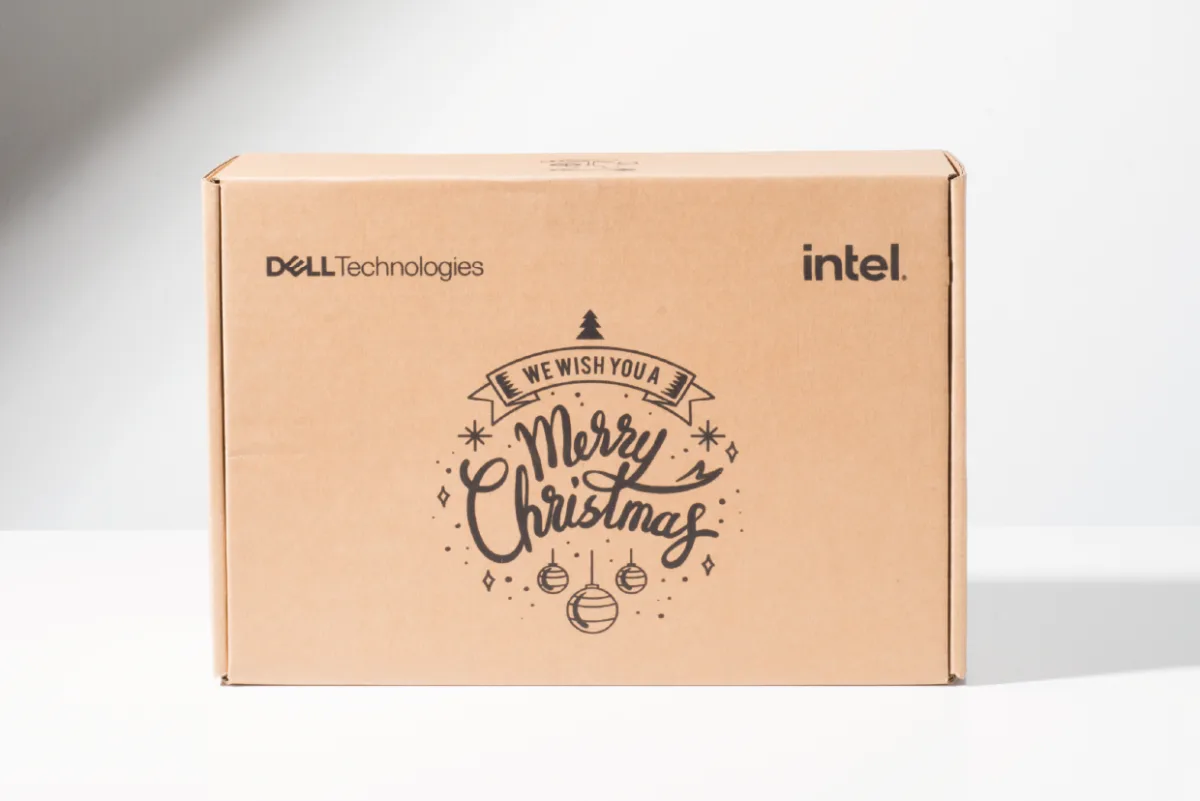
Recycled stock is available on request. The honest trade-off is colour: recycled fibre carries a grey cast, so the same file prints a shade duller and flat pastels are the first to suffer. Strong brand colours and one-colour work hold up well.
Where it works best is the outside of a shipping box: a courier box is judged on whether it survives, not on whether the white is bright. Keep virgin stock for the retail face if the colour has to be exact.
Tip: Recycled is not automatically cheaper or dearer: it depends on the grade, the size and the run. Ask for the same box, size and quantity quoted in both stocks and compare the two unit prices.
Taking the plastic out of the box
Most of what a foam insert does, a die-cut paper insert does as well: hold the product still, stop it touching its neighbour, and present it when the lid comes off. Honeycomb paper replaces bubble wrap for wrapping, and paper tape replaces plastic tape on the outside.
The exceptions are worth naming: wet or oily contents still need a barrier, very heavy items still need a moulded part, and a product with a fragile protrusion sometimes needs foam. Everything else is usually a paper problem with a paper answer.
Two limits to know before you commit. Honeycomb suits lighter products with a fairly regular surface; something very heavy, very fragile or sharp-cornered still needs judging against the actual journey. Paper tape seals an ordinary carton well, but a parcel that will sit in damp or heat for long, or take real pull, should be checked against its route first.
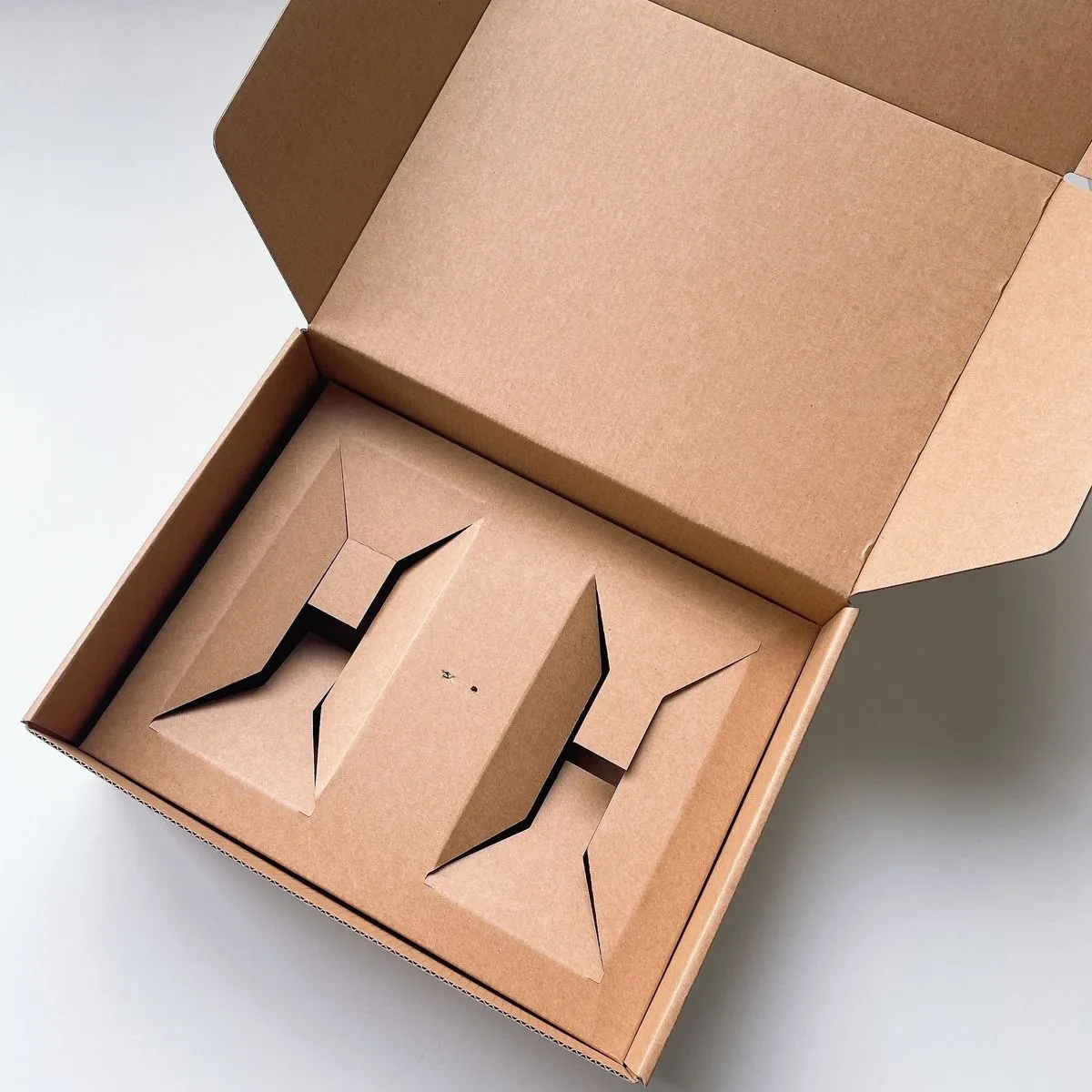
Tip: Send us the product. An insert is cut to the real thing, and that is also how we find out whether paper is enough.
The greenest change is usually the size
Boxes are cut from a sheet. A size that leaves an awkward strip along the edge wastes board on every single unit, and you pay for that board whether it ends up as a box or as an offcut.
Tell us the product dimensions before you fix the box dimensions. Moving a side by five millimetres can change how many boxes come off each sheet, and that shows up in both the price and the amount of paper bought.
Tip: A right-sized box also ships smaller: less freight, less storage space, and a lower volumetric weight for the courier to charge on.
Tip: No exact dimensions yet? Measuring is free. Once the quote and quantity are agreed, post us the product and we take them.
Designing a box that can actually be recycled
Start by removing whatever cannot be separated from the fibre: a film glued over the board, a plastic window, plastic fittings. Each one makes the box harder for a facility to process. If recyclability is the point of the project, leave the lamination off, or keep it to the panels that genuinely need protection.
Then say what the box is, on the box: the material, what was left out, and what to do with it afterwards. That one line does more for a recycling claim than any symbol, and it survives a question from a customer.
Tip: FSC and recyclable are two different questions. FSC is where the fibre came from; recyclable is what got stuck to it afterwards. A box can be one, both or neither.
The claims not to print
A recycling symbol on a laminated box, "eco-friendly" with nothing behind it, or an FSC mark without a licence code all create a problem later — with a customer, a retailer, or a regulator. None of them helps the product sell.
What does work is specific and checkable: name the material, name what you removed, and say what to do with the box. "Paper insert, no foam" or "Board recycled where facilities accept it" both survive a question from a customer.
What to ask for at quote time
Four lines in the first message settle most of it: whether the stock has to be certified or recycled, whether the insert has to be plastic-free, the product dimensions rather than the box dimensions, and whether anything will be printed as a claim.
Not decided yet? Come and see the stocks. Recycled and certified papers look and feel different from their virgin equivalents, and that is easier to judge in the hand at our office than from a spec sheet.
Eco packaging questions
Does BM Pack hold an FSC certificate?+
Yes. BM Pack is FSC certified, so your box can carry the FSC label — provided that run is printed on certified stock and the mark carries our licence code. Tell us at quote time: it is a paper-buying decision, and the certified grade has to be reserved before the job goes on press.
What is the minimum size for the FSC logo?+
The logo on its own may not be printed below 6 mm in height, and FSC recommends 10 mm. A full on-product label may go down to 9 mm wide in portrait or 6 mm high in landscape, with 17 mm and 12 mm recommended. Those are clauses 8.5 and 8.9 of FSC-STD-50-001 V2-1; the rule behind them is that every element has to stay legible at the size you print.
Can the FSC logo be printed in our brand colour?+
No. The green is Pantone 626C or its closest approximation, and black-and-white positive and negative versions are available. Only where the print area cannot carry any of those may another colour be used, and it then has to give legible contrast on a solid background (clauses 8.2 and 8.3).
Can BM Pack put the FSC label on our box if we are not certified ourselves?+
The label then carries the printer's licence code, not yours. If you are certified too, a supplier may label with your code instead, provided the product sits inside both certificate scopes, both parties tell their certification bodies in writing and name who approves the labels, and the code is used only on goods supplied to you (clause 4.8). Either way the artwork comes from FSC's trademark portal through a certification body, never from us.
Is FSC packaging the same as recyclable packaging?+
No. FSC is about where the fibre came from and who handled it on the way. Whether the finished box recycles depends on what is added afterwards: lamination, a plastic window, fittings. Think about both, but settle them separately.
How much more does recycled stock cost?+
It depends on the grade and the run; some recycled boards cost the same as their virgin equivalent, specialty ones cost more. The bigger difference is usually on press, not on the invoice: a recycled sheet is slightly greyer, so colours read a shade duller.
Can a laminated box still be recycled?+
It is harder. The film has to separate from the fibre, and not every facility does that. If recyclability is the point of the project, leave the lamination off, or keep it to the panels that genuinely need protection.
Can packaging be completely plastic-free?+
Often, yes — paper inserts, honeycomb wrap and paper tape replace most of what foam and bubble did. The exceptions are wet, oily or very heavy products, where a barrier or a moulded part still does a job paper cannot.
Is eco packaging always more expensive?+
Not always. The two changes that help most — dropping a plastic insert for a paper one, and sizing the box so it nests on the sheet — usually take cost out. Certified and specialty stocks are where the money goes in.
Next: tell us the requirement, not the wording
Send the product dimensions and the part of this that matters to you — certified stock, no plastic, or both — and we will come back with what is available at your quantity and what it does to the price.