If you are ordering custom boxes for the first time, working out the size can feel a bit confusing, and that is completely normal. The question we hear most is simply: "my product is this big, so what size box should I order?" Many people measure the product with a ruler and send us three numbers, which is a good start. Here we share how we usually go from there.
Below we go through inner and outer size, how to go from your product to the box size step by step, how big each box style comes out, how inserts are sized, and how we can measure for you and send the dieline. If anything is unclear, we are always happy to help.
Four sizes worth keeping apart
- Product size 產品尺寸
- Everything that goes in the box, measured the way it will sit.
- Inner size 內徑
- The product size plus a little room, usually about 2–3 mm each in length, width and height. This is what you order by.
- Finished size 成品尺寸
- The box measured from outside: a little bigger than the inner size, depending on the box style.
- Insert cut-out 內托開孔
- Best sized from the actual product; we are happy to do it for you.
On our product pages you can enter the inner size in millimetres and see the price straight away.
Inner and outer size: a good place to start
Inner size is how much the box holds. If your product measures 100 × 50 × 20 mm, the inner size will need to be a little larger so it goes in comfortably. Outer size is the box measured from outside once it is folded or assembled: the inner size plus the board, and a little more for some box styles.
In our experience, a size sent to a packaging maker is usually read as the inner size, and that is what our product pages ask for too. An outer size is only needed when something outside the box sets a limit, such as a retail shelf, a display or a courier size band.
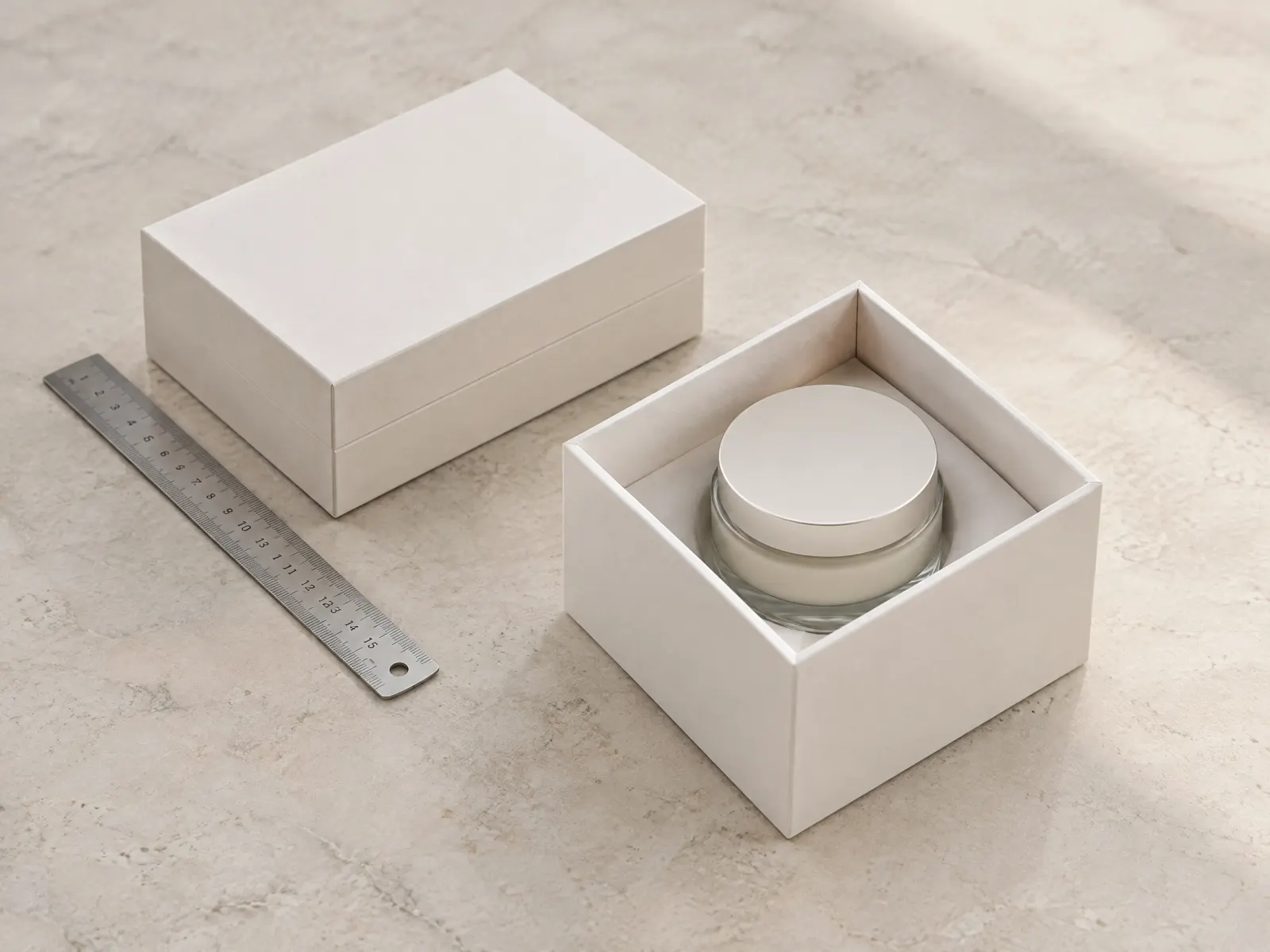
Tip: When you send a size, adding "inner" or "outer" after the numbers helps us a lot.
Your product is this big: what box size should you order?
This is the question we hear most, so here it is step by step. In short: measure the product the way it will sit in the box, add a little room, and that is the inner size you order by.
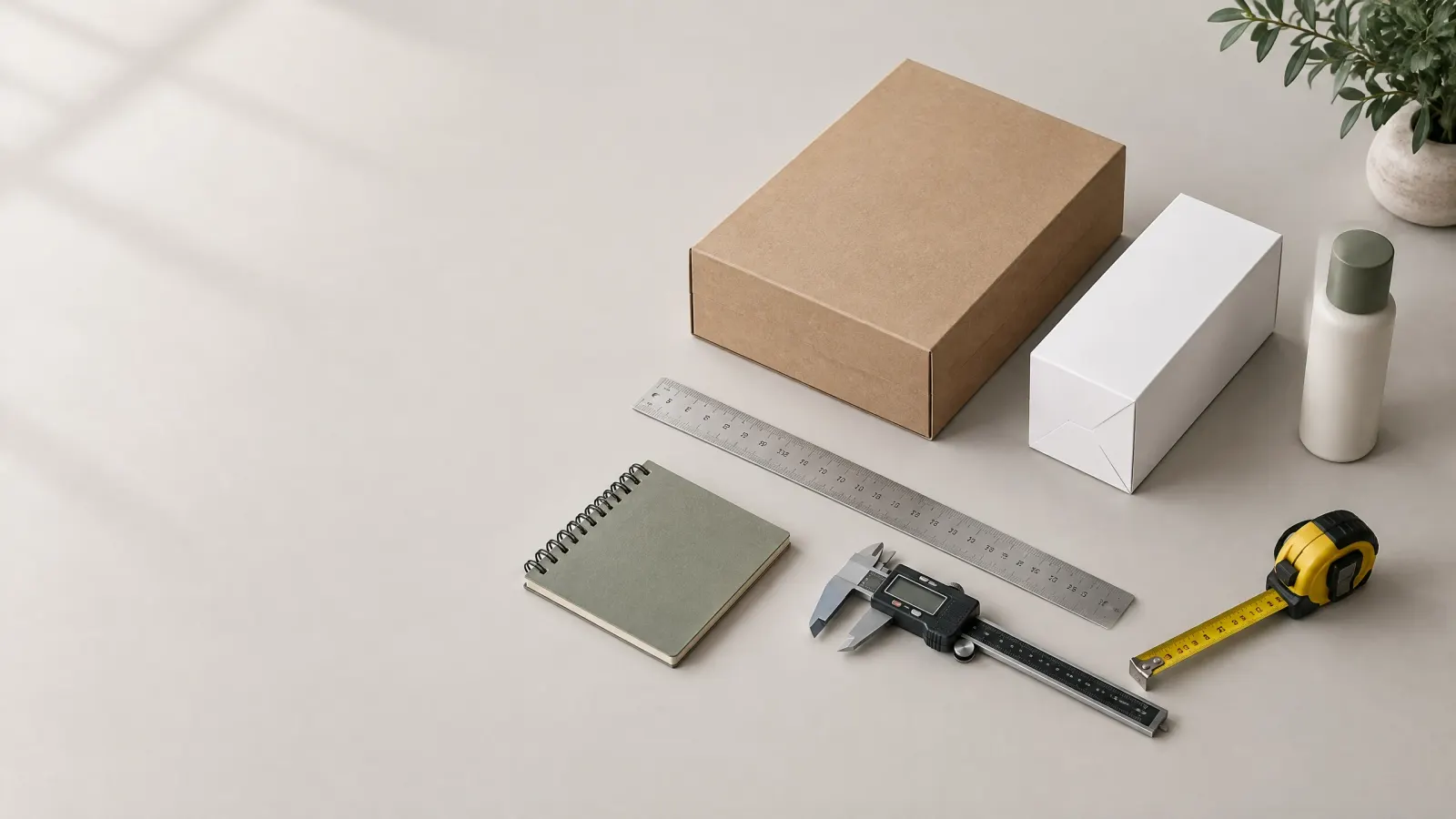
Step 1, measure everything that goes in. Not just the bare product: include accessories, a leaflet, a protective sleeve, or a bottle's pump or cap. Measure at the widest and tallest points. For a round product such as a jar or bottle, use the diameter for both length and width.
Step 2, decide which way it sits. Length and width are the face you see when you look into the open box; height is how deep the box is. Measure the product the way it will sit: a bottle standing up gives its full height as the box height; lying down, the height becomes its diameter.
Step 3, add a little room. If the inner size matches the product exactly, it can be hard to get in and out. From our experience, about 2–3 mm more in each of length, width and height feels just right. Soft products that squeeze a little can sit closer; fragile items, or anything packed with filler paper, need more, and we are happy to suggest how much.
Step 4, several items together. Lay them out the way you would like them to sit, measure the outside of the group, then add the room as in step 3. If they need to be held apart, an insert is the easiest way, and section 4 explains how we size it.
| Product | Product size | Suggested inner size (folding carton) |
|---|---|---|
| A boxed skincare product | 100 × 50 × 20 mm | About 103 × 53 × 23 mm |
| A bottle standing up | Diameter 40 mm, height 120 mm | About 43 × 43 × 123 mm |
| Two items side by side | Each 60 × 40 × 30 mm; together 120 × 40 × 30 mm | About 123 × 43 × 33 mm |
A friendly guide only; the right size also depends on the box style, inserts and filler. If you are not sure, we can measure the product for you.
Tip: Millimetres make life easier: inches or "about the size of a palm" are easy to misread.
Tip: Not sure how to measure an unusual shape? Send us a photo with a ruler beside it, or the product itself.
From inner size to finished box: how much bigger, by box style
You give us the inner size, and we make the box to it. Each box style uses different board and a different structure, though, so the finished box comes out a little bigger on the outside. If the box has to fit a shelf, a display or a courier size, the table below helps you estimate the finished size.
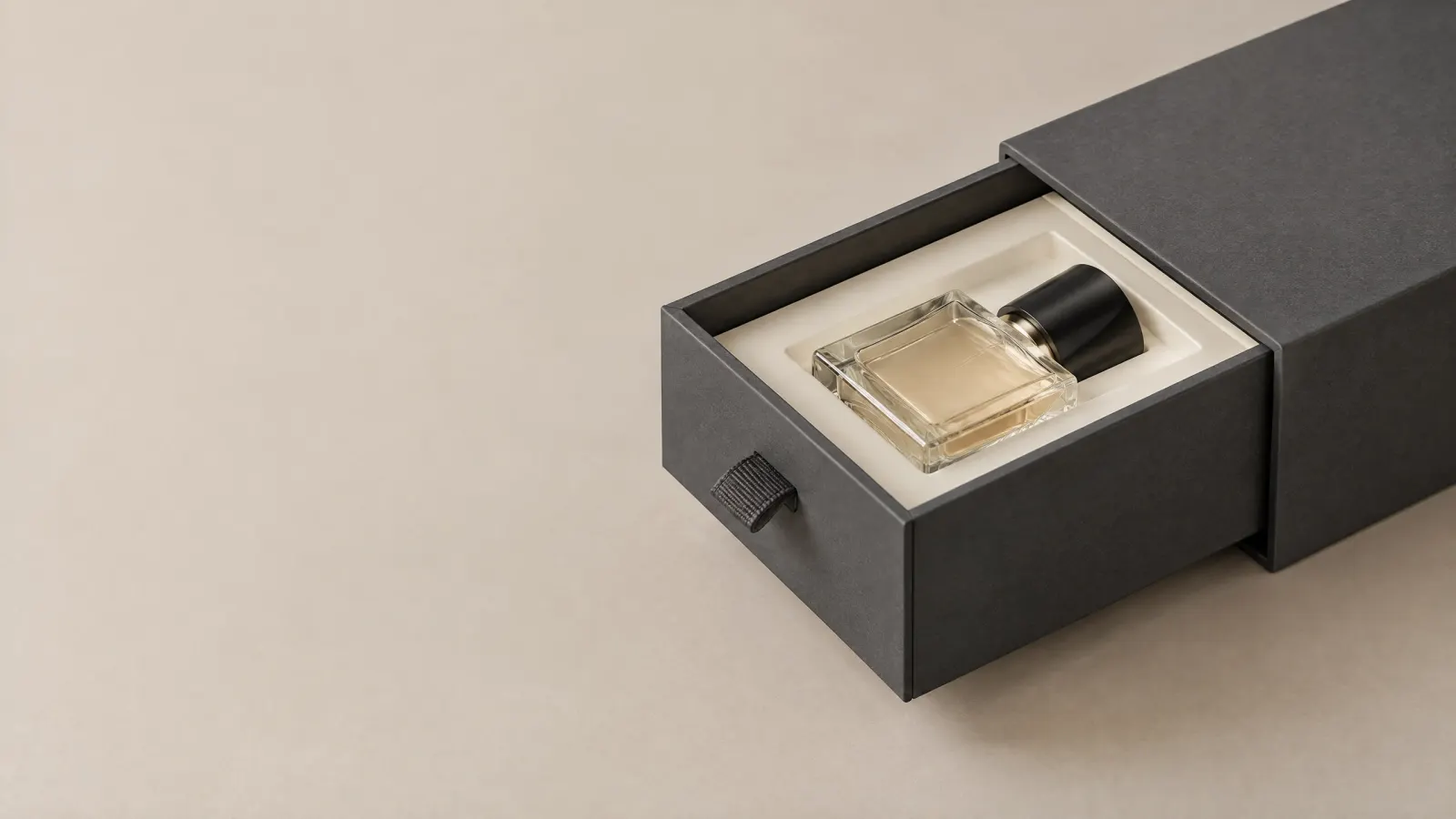
A folding carton only adds the thickness of the card, so it comes out very close to the inner size. A lid-and-base rigid box adds greyboard and wrap paper to the base, and the lid sits over the base with its inner size about 1 mm larger than the base's outer size. A drawer box has its sleeve about 1–1.5 mm larger than the tray, plus the sleeve's own board. A corrugated mailer adds the board on every side: about 1.5 mm for E flute and about 3 mm for B flute.
| Box style | Finished size, from your inner size |
|---|---|
| Folding carton | Inner size plus the card thickness: very close to the inner size |
| Lid-and-base rigid box | Base plus greyboard and wrap; the lid's inner size about 1 mm over the base's outer size |
| Drawer box | Sleeve about 1–1.5 mm over the tray, plus the sleeve's board |
| Corrugated mailer | Inner size plus the board on every side: E flute about 1.5 mm, B flute about 3 mm |
These are figures from our own production experience; the exact size moves a little with the paper. If you need a precise outer size, just let us know and we will work it out with you.
Inserts: we can size them from your product
For bottles, jewellery or anything you would rather keep still, an insert holds the product and the box holds the insert. From our experience, cut-outs in EVA or foam about 0.5–1 mm larger than the product work best, snug enough not to rattle and easy to lift out with a finger. A small finger notch beside little items is a nice touch.
Because the fit is so close, the easiest and most reliable way is to size the insert from your actual product. Just send it to us: we measure each item, lay out the cut-outs, and make the insert so everything goes in and comes out nicely.
An insert also adds a little to the depth: the box depth is roughly the product height plus the insert beneath it. When we size the insert from your product, we work this out together with the box size.
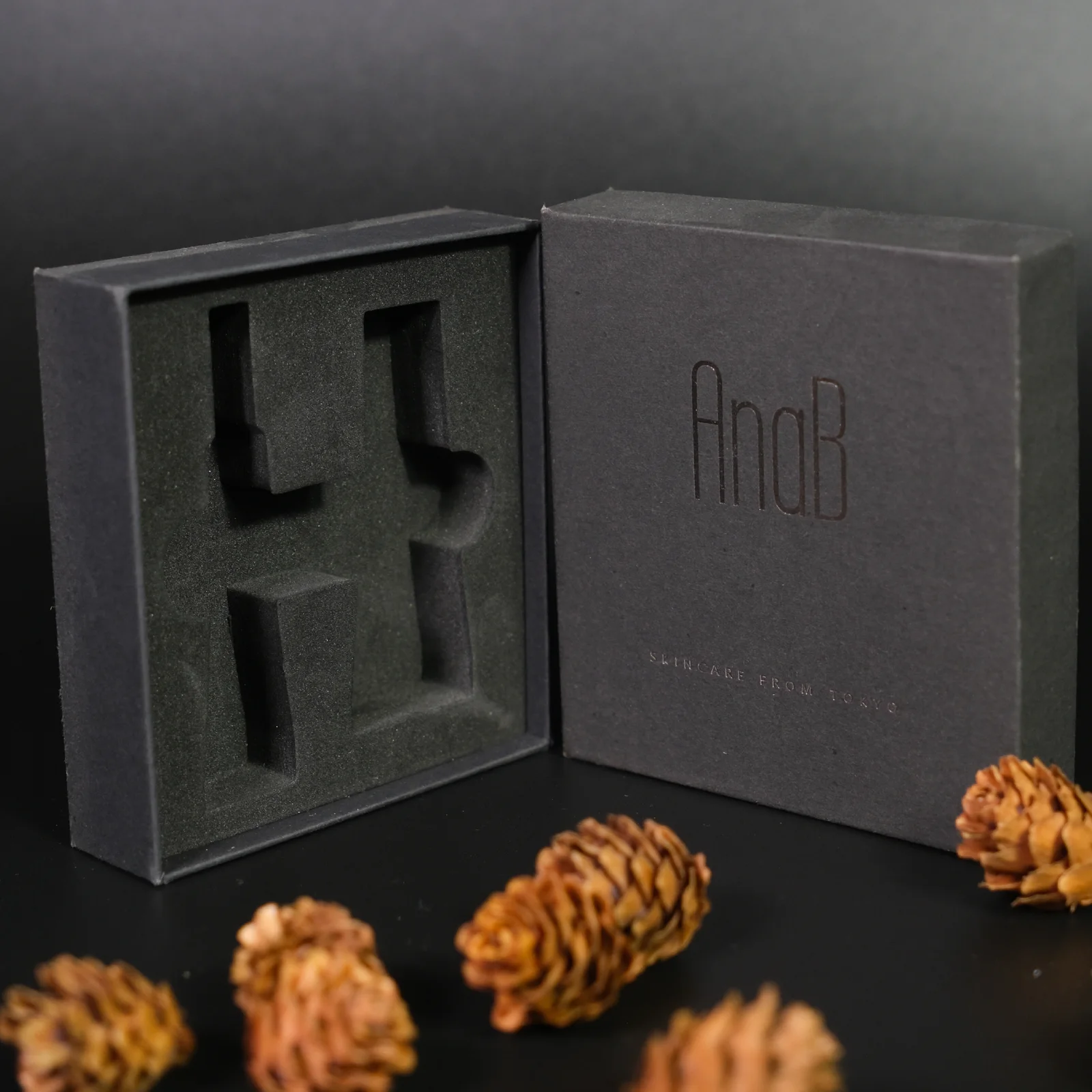
Tip: Foam suits glass and heavier items; a paper insert is lighter, more affordable and recyclable for cartons and jars. We are happy to suggest one for your product.
Not sure? We can measure for you and send the dieline
If you are not sure how to measure, or the product has an unusual shape, just send it to us. We will measure it free of charge and suggest the box style and inner size that suit it.
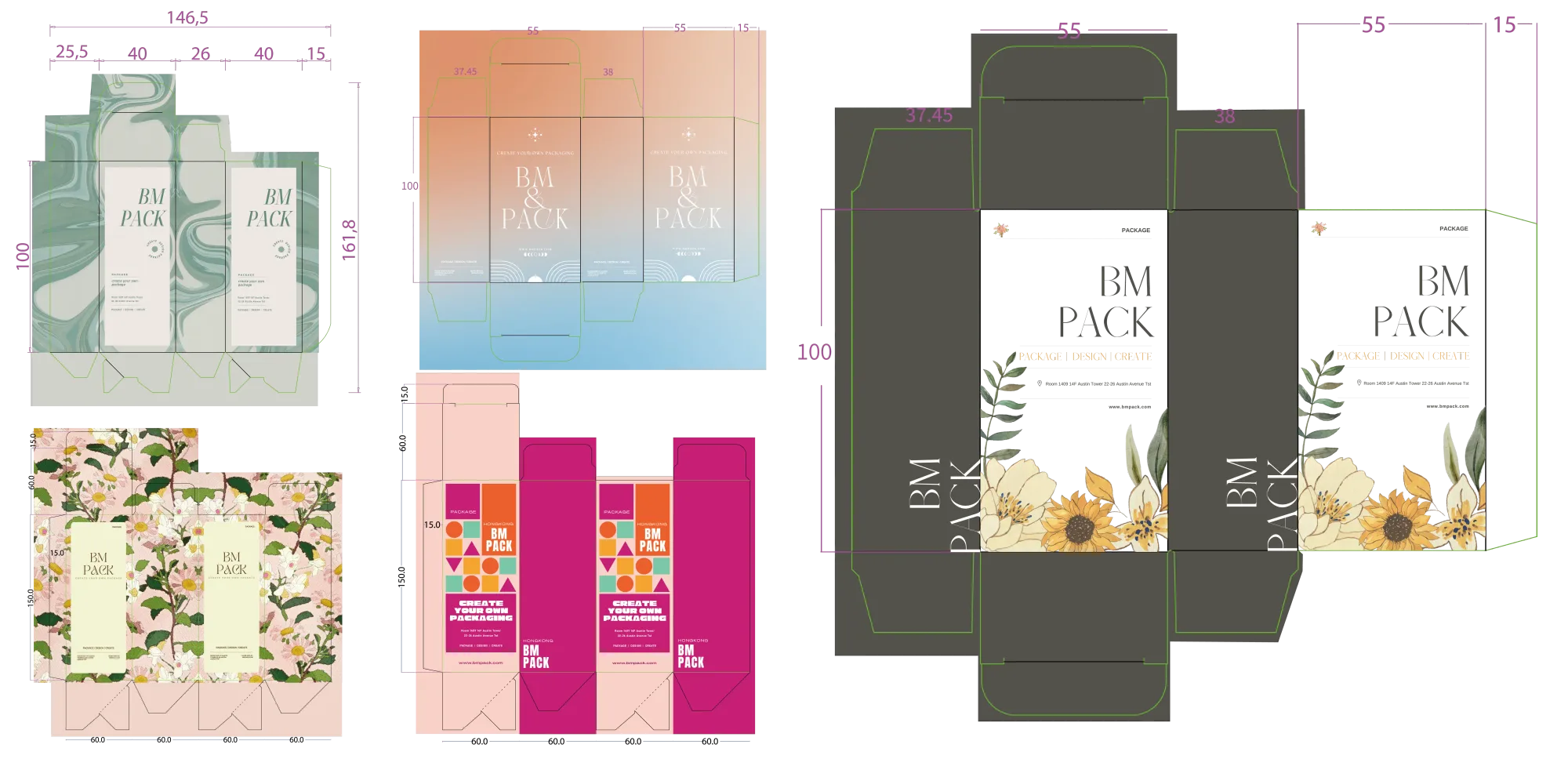
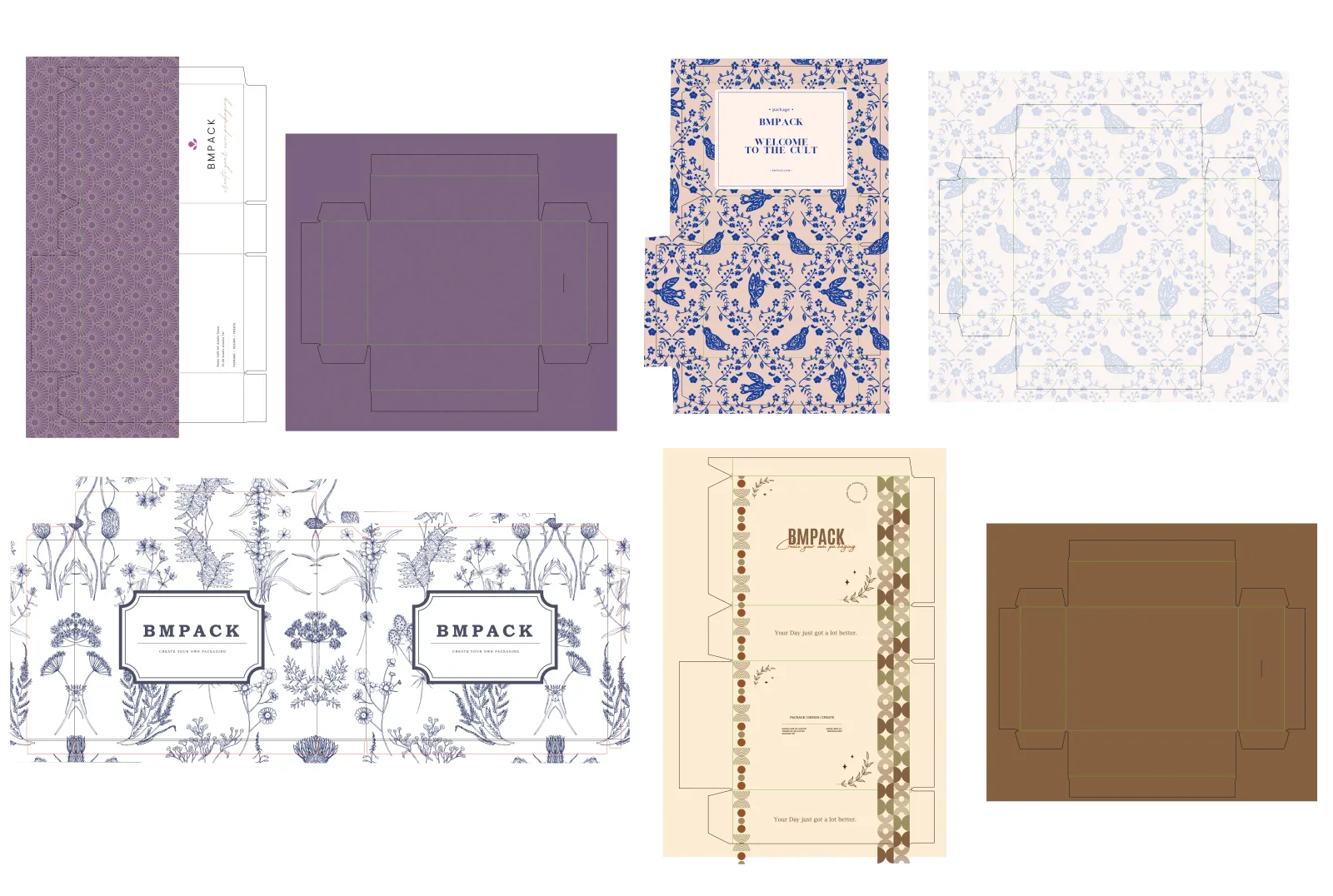
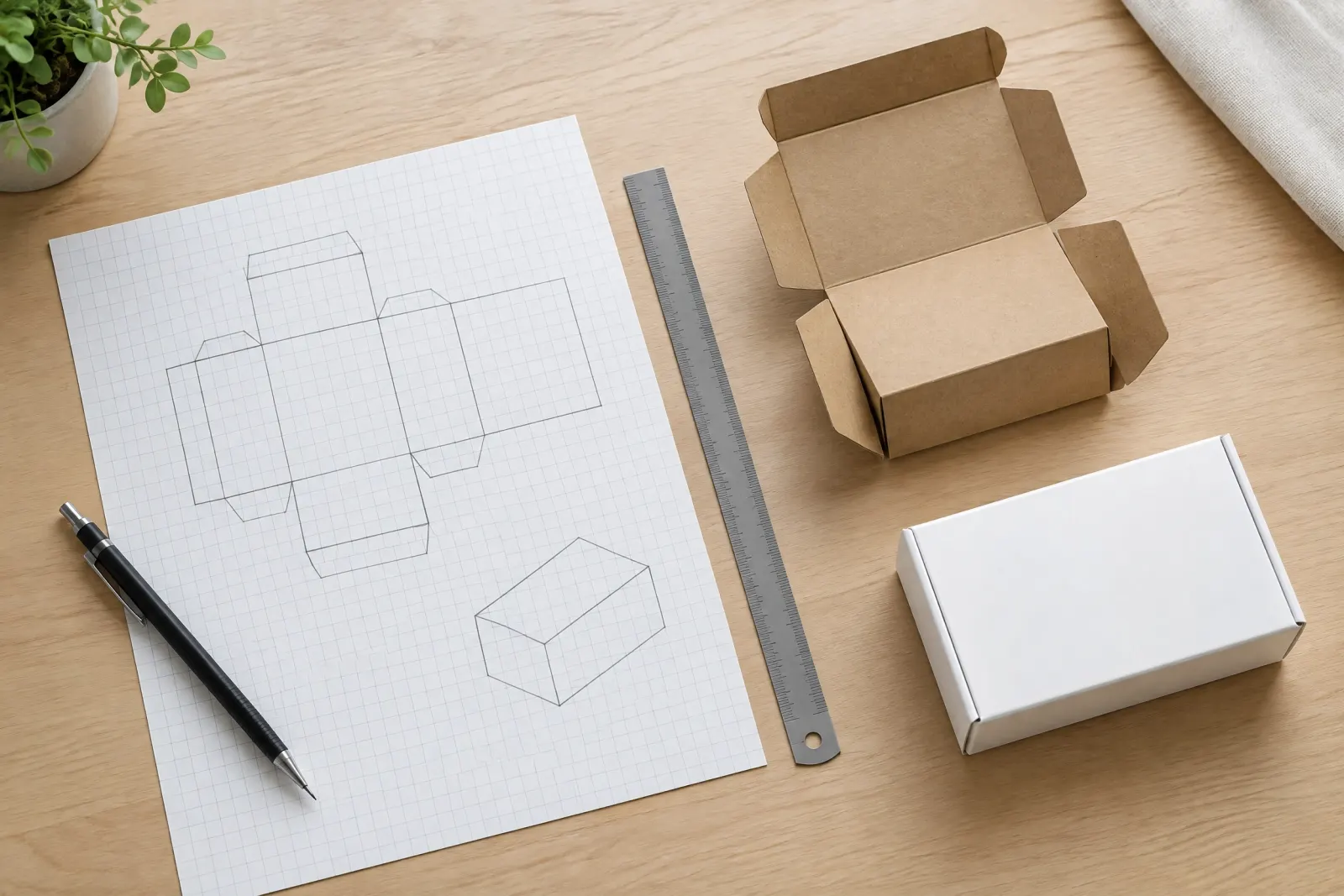
Once the size and specs are confirmed, we send the dieline with the formal quote. A dieline is the box laid flat, with the fold lines, cut lines and bleed marked and every size already worked out, so you or your designer can place the artwork straight onto it.
Size questions
My product is 100 × 50 × 20 mm. What size box should I order?+
For a folding carton we would usually suggest an inner size of about 103 × 53 × 23 mm: roughly 2–3 mm more in length, width and height, so the product goes in and out comfortably. If it needs an insert or filler, the size changes a little, and we are happy to work it out with you.
Do you quote by inner or outer size?+
We quote by inner size: every size box on our product pages is the space inside, length × width × height in millimetres. If you have an outer limit, such as a shelf or a courier size, just let us know and we will work back to the inner size with you.
Can you measure my product and make the insert for me?+
Of course. Just send the product to us. We will measure it free of charge, suggest the box size, and if you need an insert we size the cut-outs from your actual product so it fits properly.
Do you provide the dieline?+
Yes. Once the size and specs are confirmed, we send the dieline with the formal quote. It shows the box laid flat with the fold lines, cut lines and bleed marked, so you or your designer can place the artwork straight onto it.
In what order should I write length, width and height?+
We write it as length × width × height, in millimetres. Length and width are the face you see when you look down into the open box (length is usually the longer side), and height is the depth. For example, 150 × 100 × 50 mm is a box 150 mm long, 100 mm wide and 50 mm deep.
How do I measure a round or irregular product?+
For a round bottle or jar, use the diameter for both length and width, and the height including the cap or pump. For an irregular shape, measure the widest, longest and tallest points as if it sat in an imaginary box. If it is tricky, a photo with a ruler beside it helps, or simply send us the product and we will measure it for you.
My boxes go by courier. How should I size a mailer?+
Start from the product and the inner size as usual, then check the outer size against the courier's size and weight bands: a corrugated mailer adds about 1.5 mm (E flute) to 3 mm (B flute) on every side. If you are close to a band limit, tell us the limit and we will work back to an inner size that stays under it. Leave a little extra room if you pack with filler paper.
Can I change the size after ordering?+
Yes, before the dieline and artwork are confirmed. Once they are approved and production has started, the size can no longer change, because every order is made to your specs. That is why we are always happy to go through the size with you first.
Next: try your inner size and see the price
Pick a box style and enter the inner size in millimetres, and the unit price updates as you go. Not sure about the size? Just send us the product or a message, and we will be glad to help.