If you run a bakery, a cafe or a food brand and are ordering custom boxes for the first time, the choices can feel endless. Our experience is that it gets much simpler once you start from two questions: what is the food, and where is it sold? A warm egg tart carried home, a cookie tin on a shelf and a New Year gift set each want a different box. Here we share how we usually go from those two answers to a box.
Below we go through box styles by food type, the four things we check in a food box design, the papers and coatings we usually use, what eco takeaway means in practice, how festive gift sets come together, and how we can help before you order. If anything is unclear, just ask us.
Four things worth settling first
- Food type 食品形態
- Oily, fragile, tall, still warm, or heavy: each points to a different structure.
- Sales setting 售賣場景
- Counter takeaway, retail shelf, courier delivery or gifting.
- Food contact 接觸食品嘅面
- Kept unprinted; the board and coating are confirmed item by item before the order.
- Budget and quantity 預算同數量
- Most food cartons start at 100 pieces; the unit price moves with quantity and colours.
On every product page you can enter the inner size and quantity and see the reference price straight away.
Start from the food: which box style we usually suggest
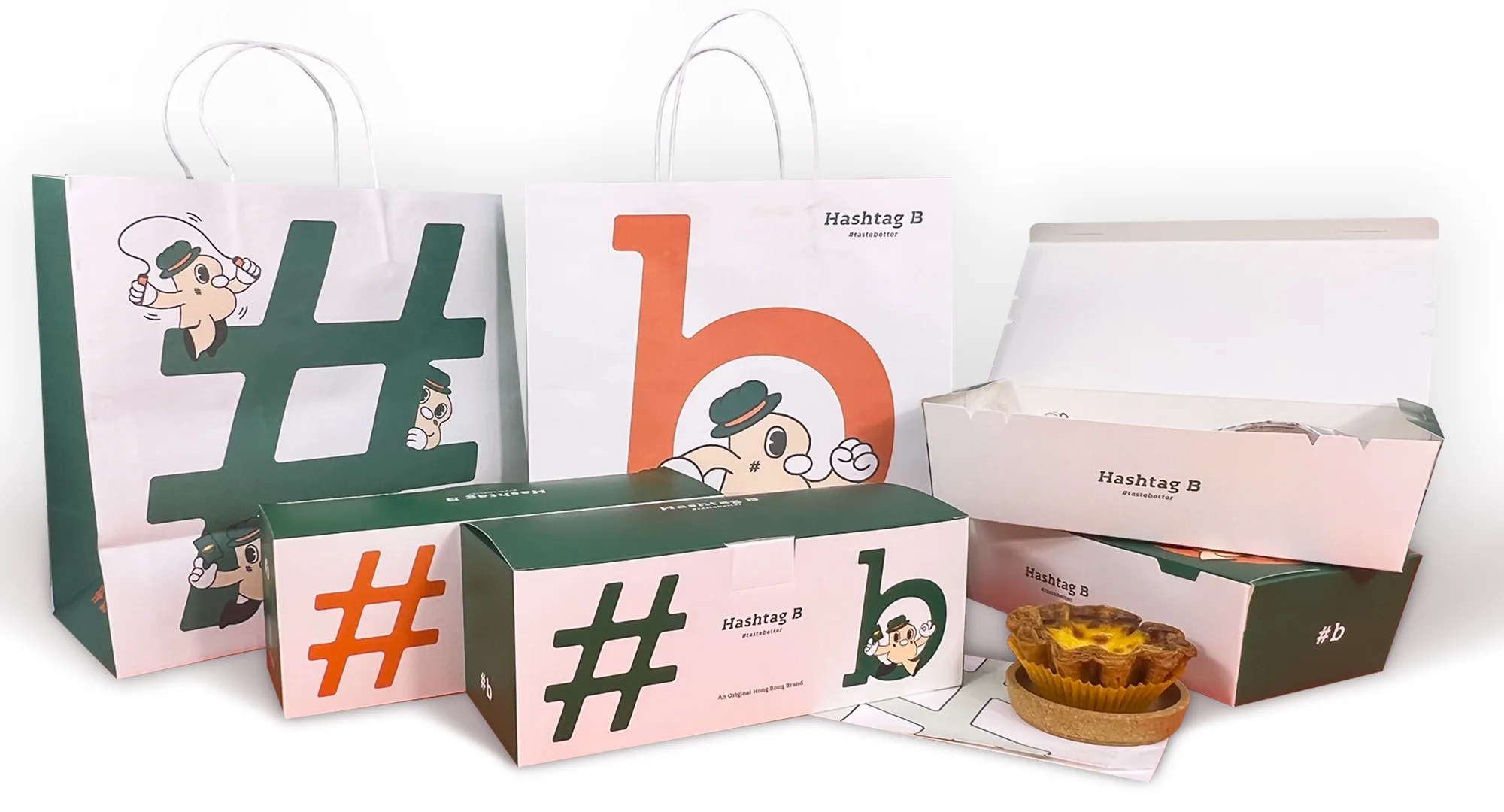
Most of the time the food itself decides the structure. Something fragile wants dividers; something oily wants a liner and a little air; something heavy wants a handle and a sturdier board; something for gifting wants a slower, nicer opening. The table is how we usually match them, as a starting point rather than a rule.
| Food | What we watch for | What we usually suggest |
|---|---|---|
| Cookies, biscuits, shortbread | Crumbs and breakage; keeps better dry | Folding carton with dividers or a paper tray; a lid-and-base box for a gift set |
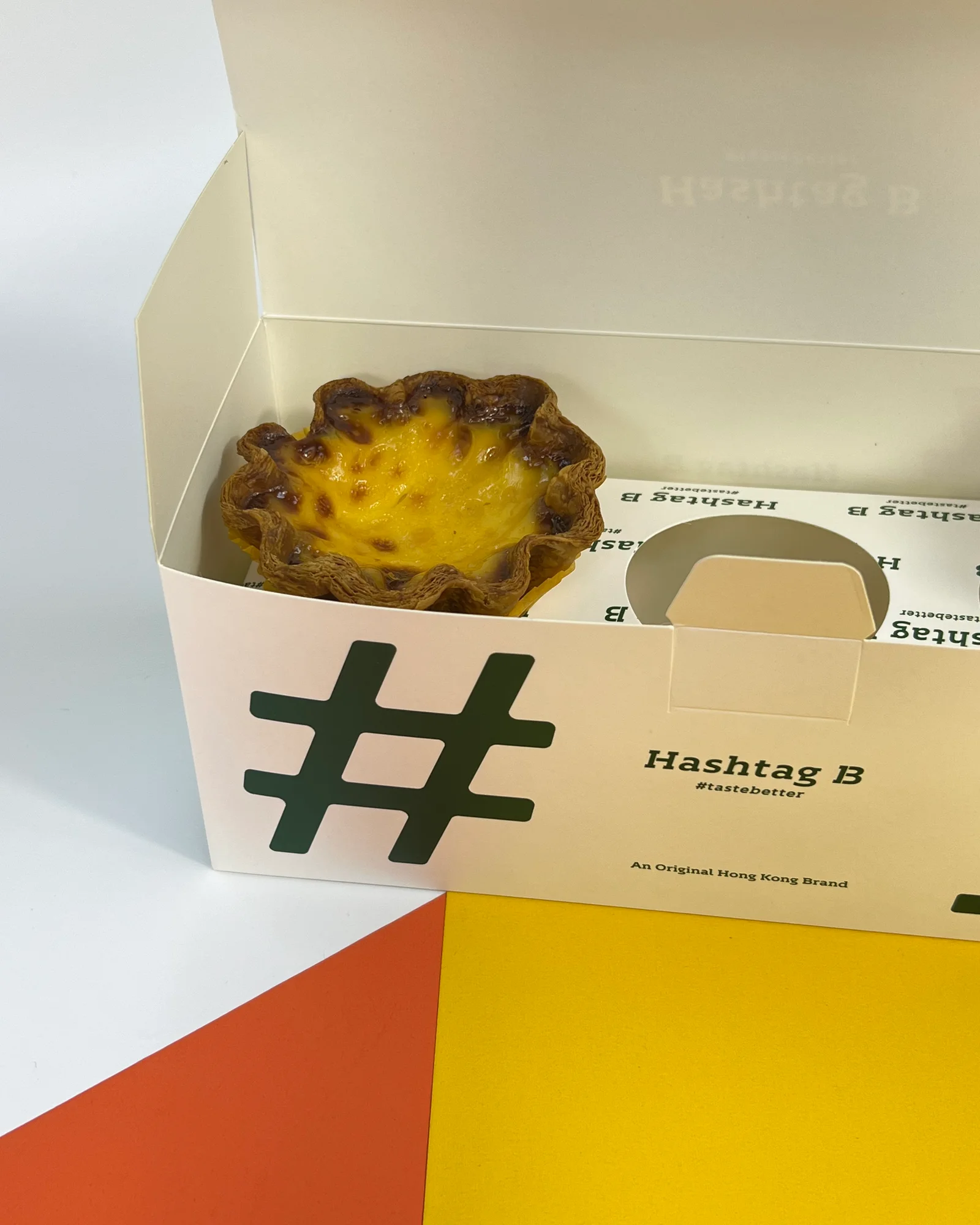
| Egg tarts, pastries, buns | Grease, and often still warm | Egg tart carton with dividers, oil-resistant inside; not sealed tight, so steam can escape |
| Cakes and desserts | Height, and carrying without a wobble | Cake carry carton with clip closure, or a mini cake carton for single serves |
| Takeaway meals and light bites | Quick to assemble, stacks neatly, resists grease | Auto-lock bottom carton in kraft or white board, one-colour logo to start |
| Noodles, dried goods, sauces | Weight, and several items together | Carry-handle carton with a divided insert, or a rigid box for the festive edition |
| Festive gift sets | The opening moment, and how it is carried | Lid-and-base rigid box or drawer box, finished with a paper bag |
A starting point from our own orders; the right box also depends on your counter, your courier and your budget. Not sure? Tell us the food and we will suggest one.
Tip: If one food has to travel by courier as well as sit on a counter, we would usually design the counter box first and add a shipping carton around it, rather than making one box do both.
Food packaging design: the four things we check first
Grease and moisture. Anything fried, buttery or iced will mark plain board within an hour or so, and the print shows it. For those we usually suggest an oil-resistant coating on the inside, or a liner or tray between the food and the box. Dry cookies and crackers are happy on plain board.
The surface that touches the food. What we usually do is print the outside and leave the inside unprinted, so the food meets bare board or the coating only. The board and any coating that touch food are confirmed with you item by item before the order, and a greaseproof sheet or paper tray is an easy extra layer if you prefer one.
Heat and steam. A warm pastry in a tightly closed box goes soft. For anything sold warm we leave the box unsealed, or add small vents, so the steam can get out and the pastry stays crisp on the way home.
Opening and carrying. A handle built into the carton, a clip closure that opens with one hand, a window so the product sells itself, a sealing sticker that shows the box has not been opened. These are small choices on the dieline that make a big difference at the counter, and we are glad to talk them through with you.
Tip: Allergen and ingredient text, a best-before space and your social handle are easiest to place while the dieline is being drawn, so send them with the brief.
Tip: If you are unsure whether a food needs a coating, send us a sample of the food and we will test it on the board.
Food packaging materials: the papers and coatings we usually use
Four boards cover almost every food box we make. White board for anything printed in full colour; kraft when you want the natural look and a lower price; E-flute corrugated when the box carries weight or travels; and greyboard wrapped in printed paper for rigid gift boxes. The paper stock guide goes deeper on each one.
Coatings are where food boxes differ from other boxes. For a carton that touches food we usually suggest a water-based varnish or no coating at all, which keeps the box recyclable and avoids plastic on the food side. Lamination gives a glossy or matte finish and extra wipe-resistance, and we keep it for the outside of gift boxes and sleeves rather than the inside of a food carton.
| Board | Feels like | We usually use it for |
|---|---|---|
| White board (C1S) | Smooth white face, prints bright | Cookie, cake and egg tart cartons in full colour |
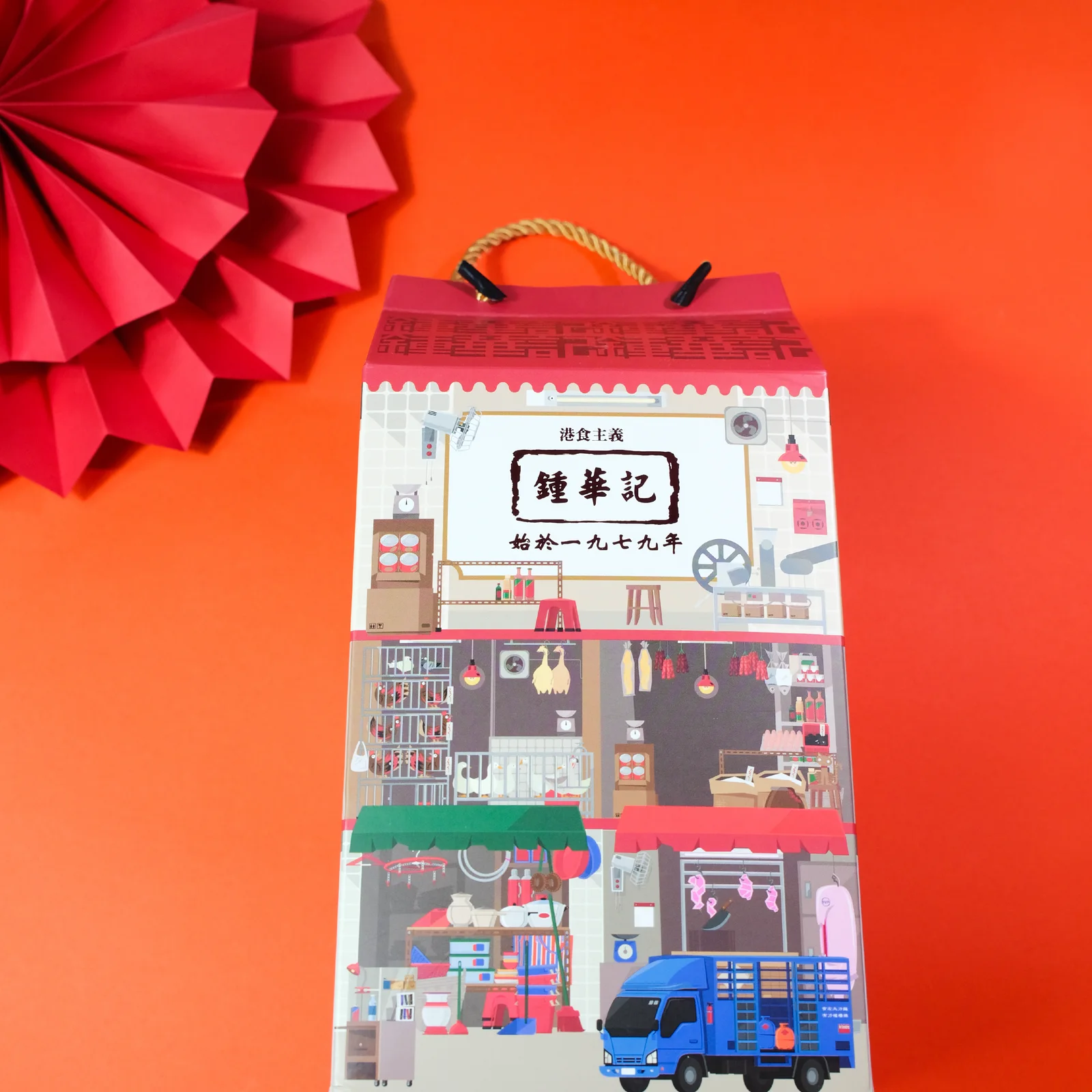
| Kraft board | Natural brown, hides marks | Takeaway cartons, carry boxes and paper bags with a one-colour logo |
| E-flute corrugated | Light but stiff, cushions | Larger cakes, heavier sets, anything sent by courier |
| Greyboard with printed wrap | Solid, premium, holds its shape | Festive rigid gift boxes and drawer boxes |
Thickness is chosen per box: a small cookie carton and a 2 kg noodle gift set do not use the same board. We will suggest one with the quote.
Tip: Kraft prints darker and warmer than it looks on screen: a one-colour logo in deep brown, black or white usually works best on it.
Eco takeaway boxes and sustainable food packaging: what it means in practice
Since phase one of Hong Kong's plastic ban took effect in April 2024, most food businesses have already moved their takeaway to paper. The next step many of our customers take is making that paper box theirs: printed, sized to the food, and chosen so it is genuinely easy to recycle.
In our range, "eco" comes down to a few practical choices. A paper carton in kraft or white board instead of plastic. FSC-certified paper when you ask for it; we hold the certificate, and the FSC guide explains what the label does and does not mean. A water-based varnish or no coating instead of plastic lamination, so the box stays a single material. And a one-piece structure such as an auto-lock carton, which uses less board and folds without glue.
One honest note. What we make is custom printed paper packaging to order, from 100 pieces. If what you need is plain stock disposable food containers by the case, we are not the right supplier for that, though we are always happy to share what we know about the papers.
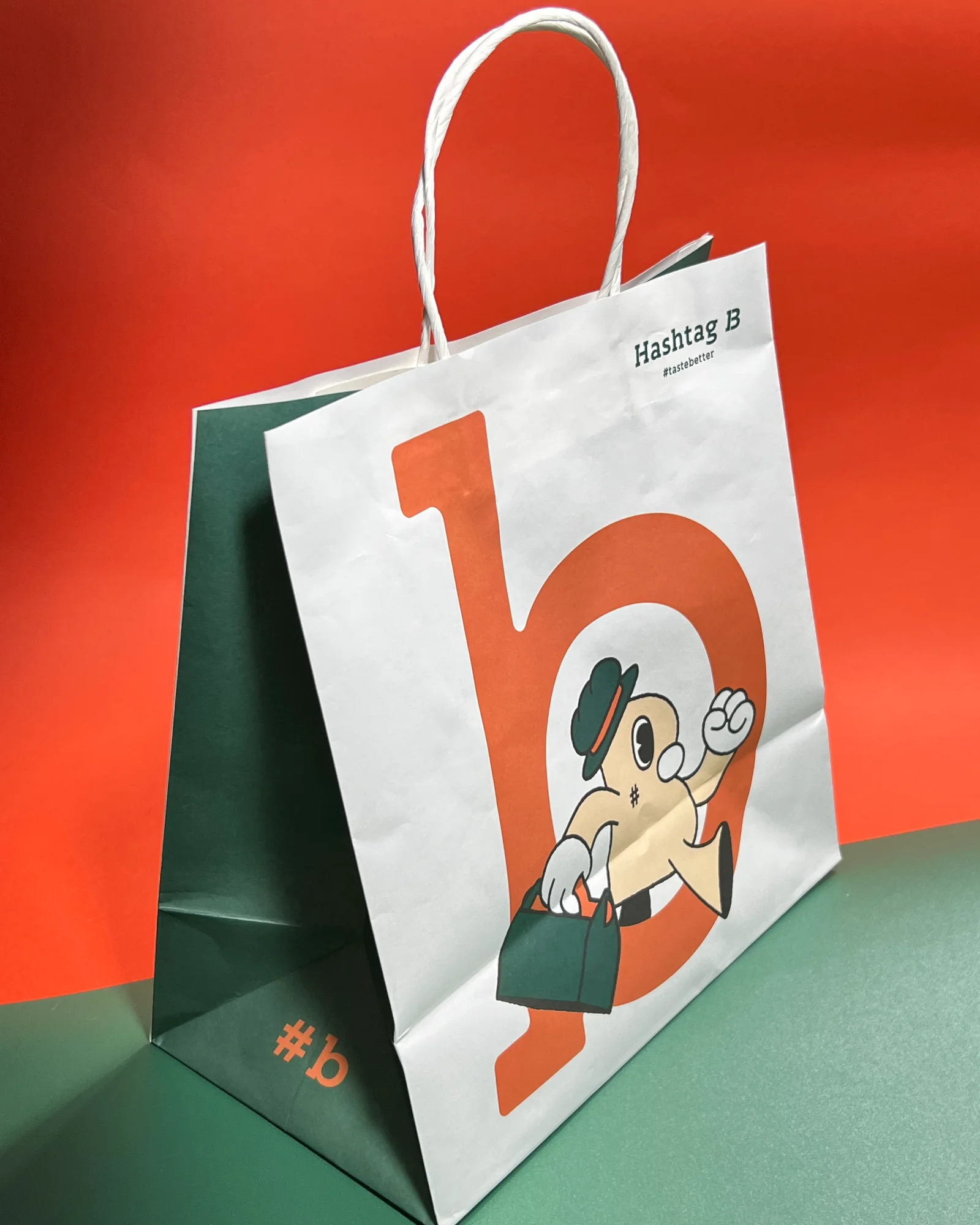
Tip: Printing fewer colours is also an eco choice: a one-colour kraft box uses less ink and costs less, and often looks more honest for food.
Food gift boxes: how a festive set comes together
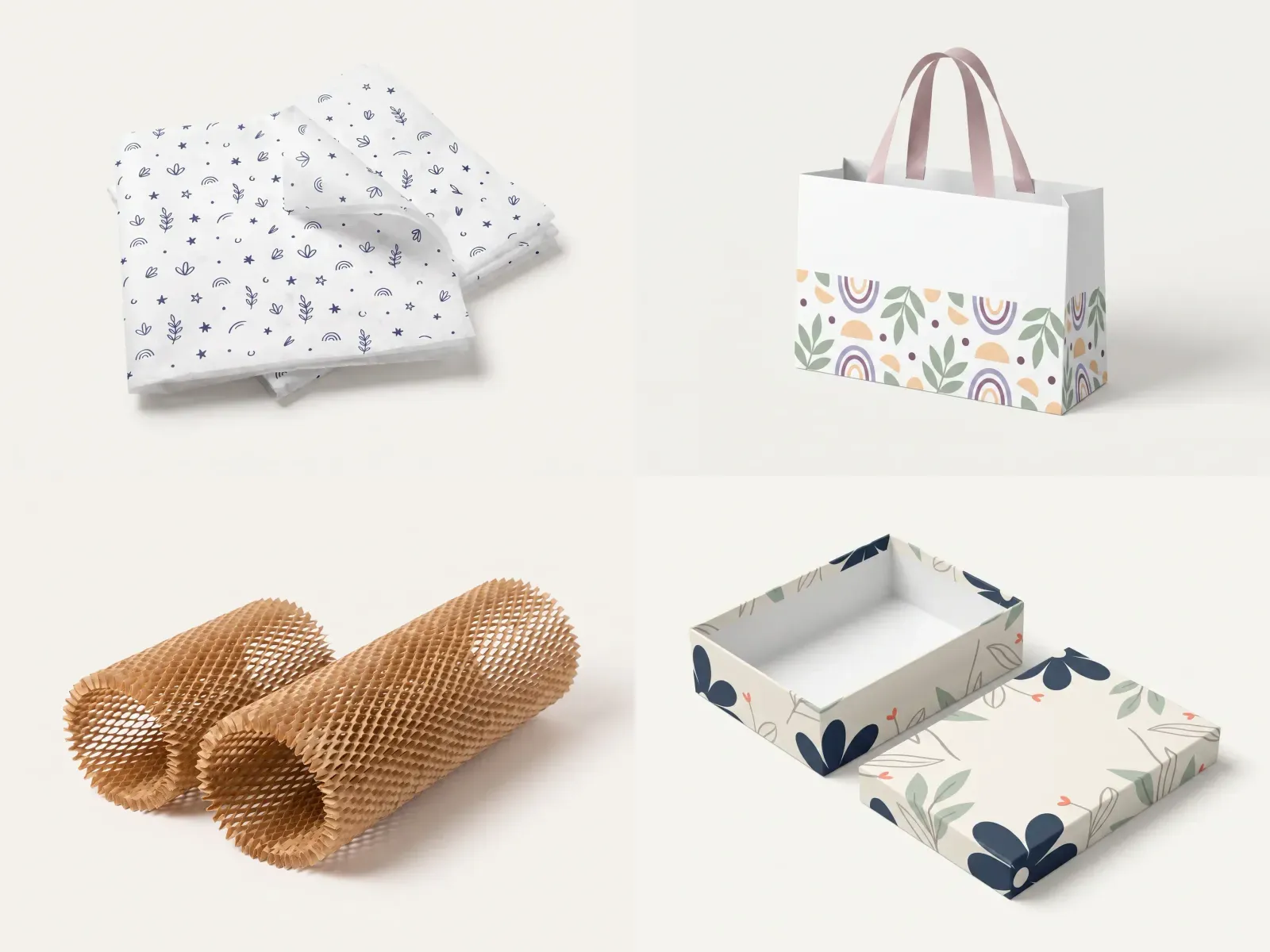
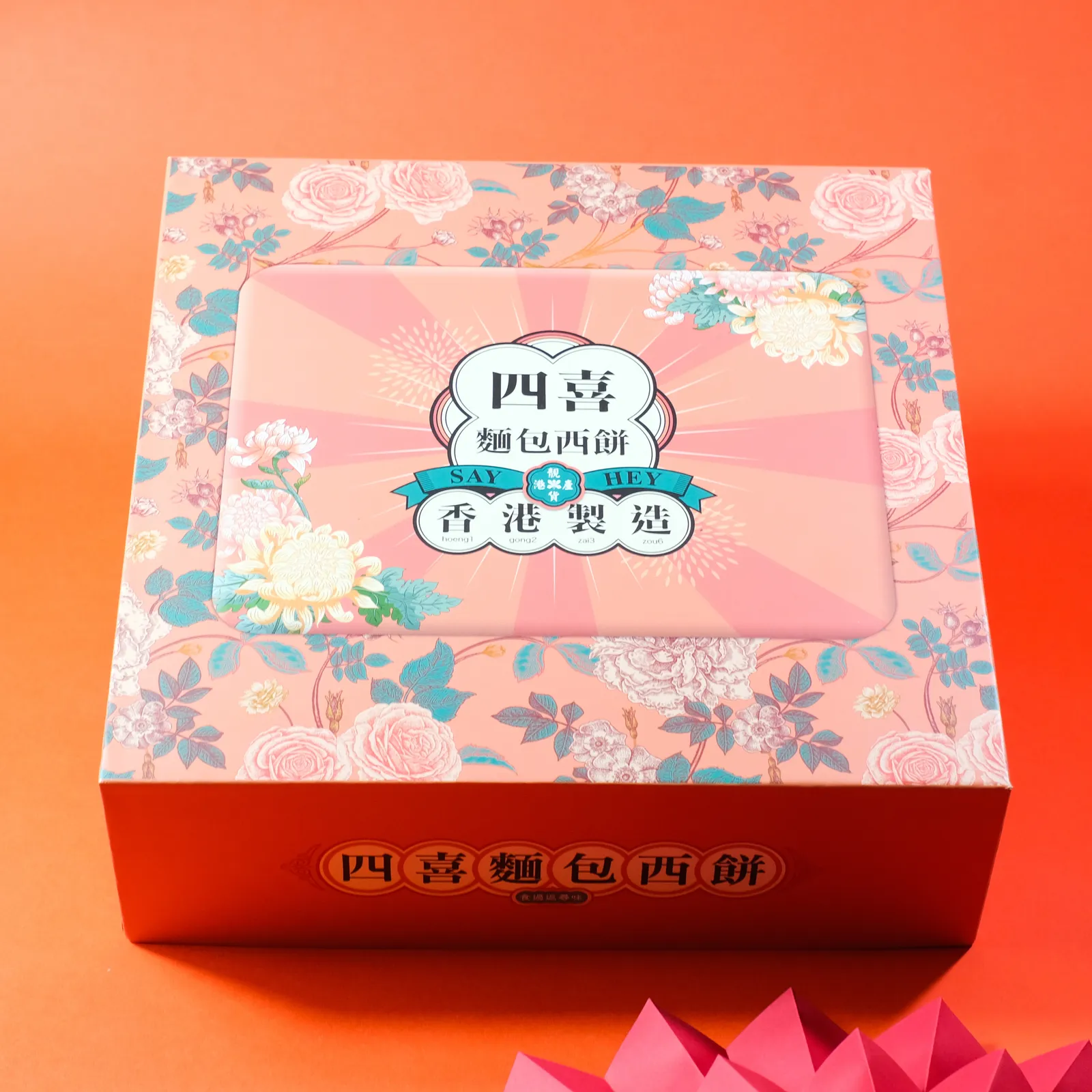
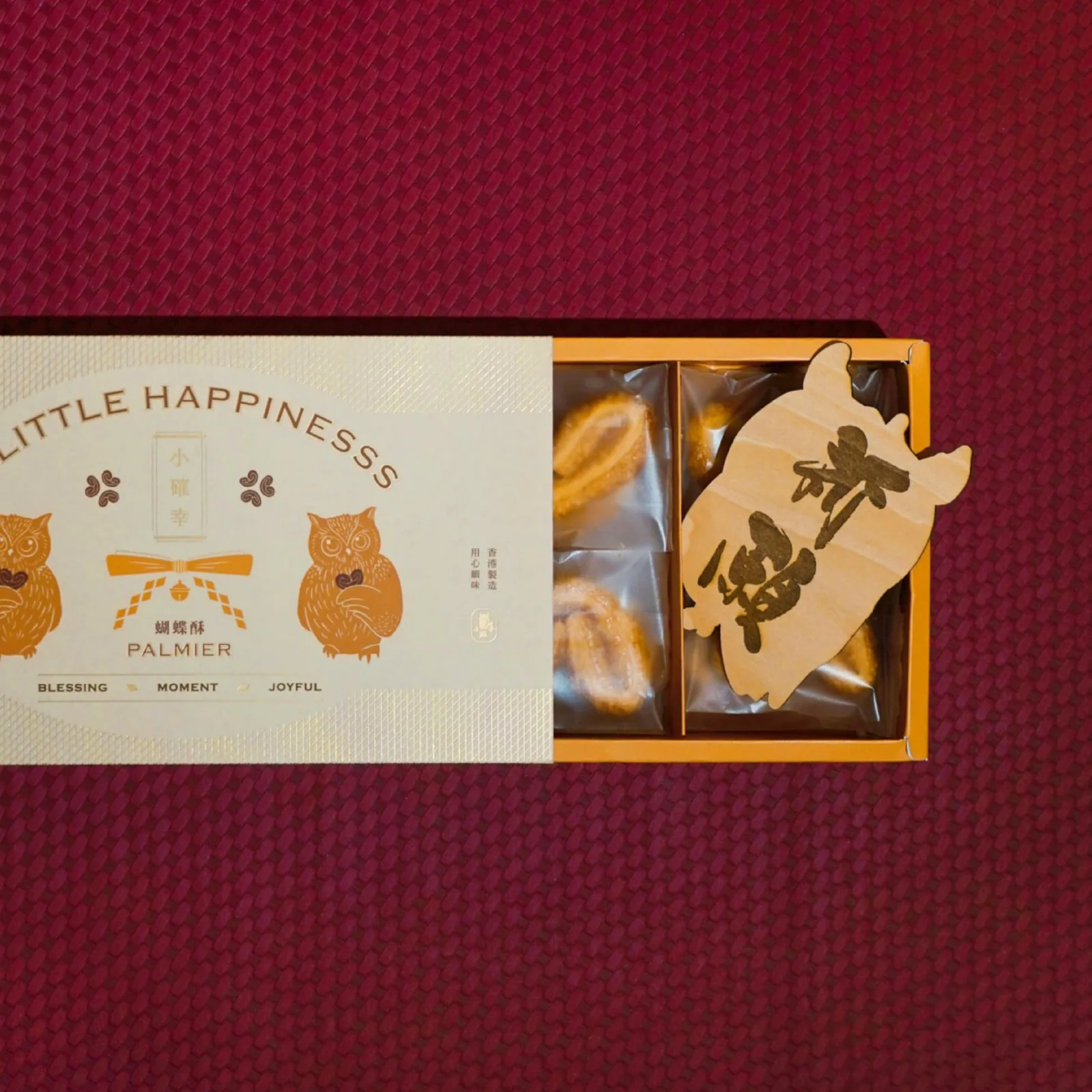
Mid-Autumn, Christmas and Lunar New Year are when a food brand's packaging works hardest. A gift set is usually three parts: the box, the insert that holds each item still, and the bag it leaves in. A lid-and-base rigid box gives the slow, premium opening; a drawer box gives a similar reveal at a lower cost; a sleeve over your everyday carton is the lightest way to dress up for the season.
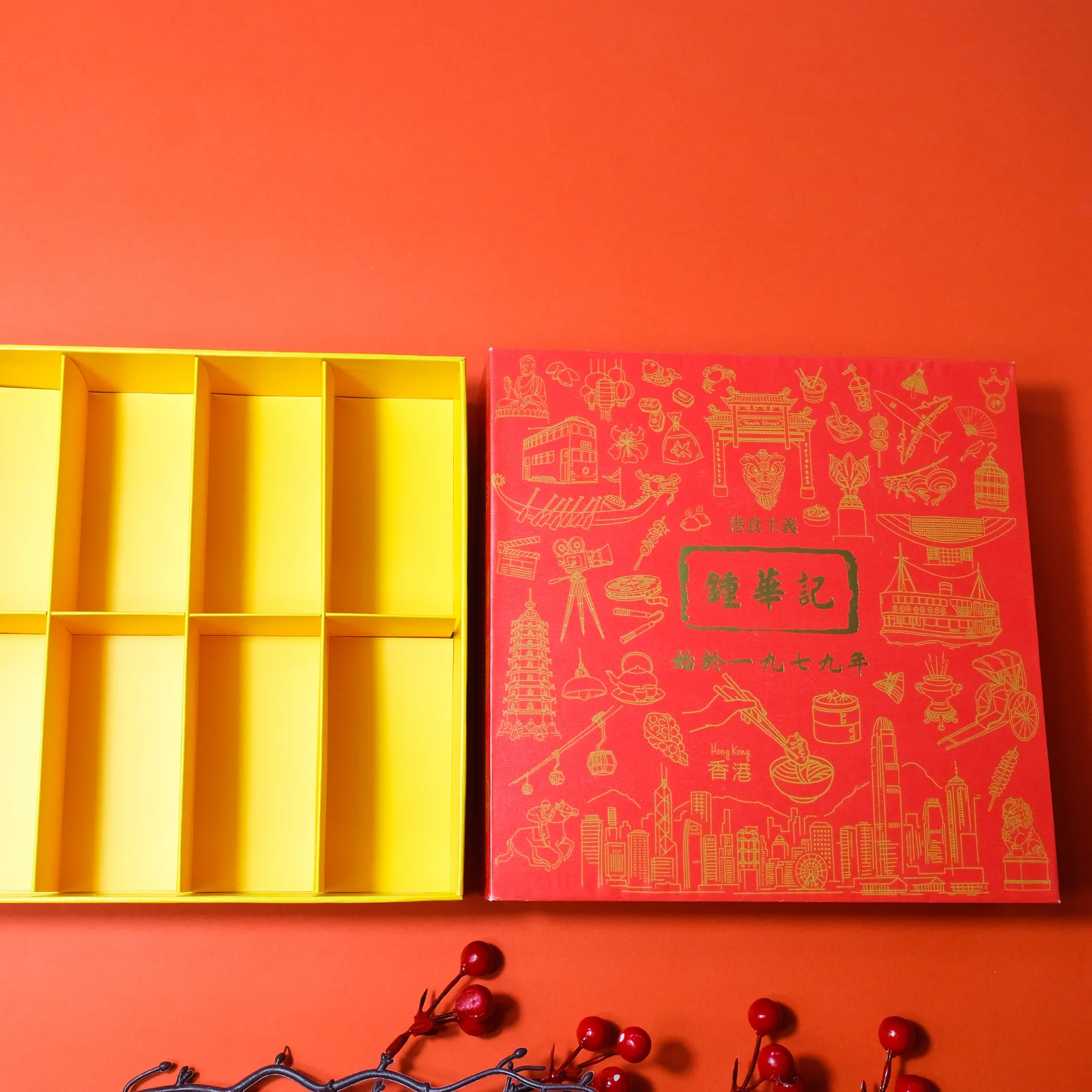
The insert is where food sets go right or wrong. A divided paper insert keeps cookies, noodle nests and sauce jars from knocking together, and it is best sized from the actual items. Send us one of each and we will measure them, lay out the compartments and size the box around them.
From our experience, festive sets go smoothest when the conversation starts two to three months before the season: enough time for a sample, a small change and the production run, without rushing.
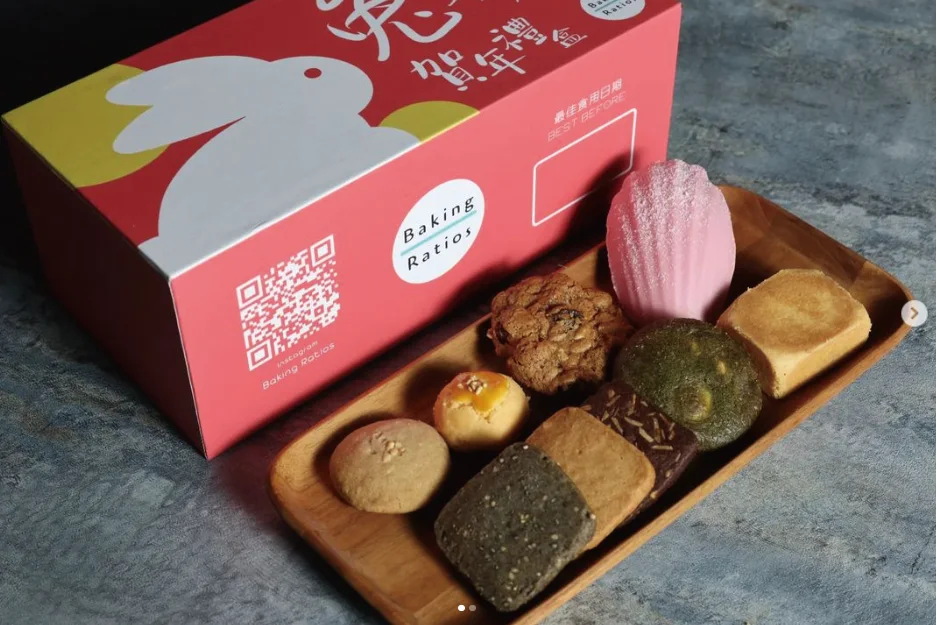
Tip: A best-before space, printed as an empty box on the lid, saves a sticker on every unit.
Before you order: how we can help
Send us the food, or the tray or board it sits on, and we will measure it free of charge and suggest a box style and inner size. If the food is oily or sold warm, we can test it on the board too. Not able to send a sample? A photo with a ruler beside it, plus the quantity you have in mind, is a good start.
Once the structure and size are confirmed, we send the dieline with the formal quote, so your designer can place the artwork straight onto it. Paper swatches are free if you would like to feel the boards first, and a white dummy of your own box can be made before the full run.
Food packaging questions
What is the minimum order for custom food boxes?+
Most food cartons on our product pages, such as egg tart, mini cake and carry-handle boxes, start at 100 pieces, and the page shows the reference price as you enter the size and quantity. Rigid gift boxes have their own minimum, shown on each product page.
Will an egg tart or pastry box go greasy?+
Plain board will show grease from a warm, buttery pastry within an hour or so. For anything fried, buttery or iced we usually suggest an oil-resistant coating on the inside, or a paper liner or tray between the food and the box. Tell us what goes in and we will suggest the simpler option first.
Can a printed box touch the food directly?+
What we usually do is print the outside and keep the inside unprinted, so the food only meets bare board or the coating. The board and any coating that touch food are confirmed with you item by item before the order. If you would rather have another layer, a paper liner, tray or greaseproof sheet is easy to add.
Can takeaway boxes be printed with our logo? From how many?+
Yes. An auto-lock carton or carry-handle box in kraft with a one-colour logo is the simplest and usually the most affordable way to start, from 100 pieces. Full-colour printing on white board is the next step up when the box is part of the brand look.
How do I size a cake or pastry box?+
Measure the food, or the tray or cake board it sits on, and add a little room. From our experience about 2–3 mm each way is comfortable for a carton, and a cake needs extra height for the decoration and a bit of air. Our box size guide walks through it, and we can also measure from a sample you send us.
What are the eco takeaway box options?+
In our range the practical choices are a paper carton in kraft or white board, FSC-certified paper on request, a water-based varnish or no coating instead of plastic lamination, and a one-piece structure that uses less board. These are custom printed boxes from 100 pieces; we do not stock plain disposable food containers.
How can a food gift box be kept affordable?+
The approaches we see work best: keep your everyday carton and add a festive sleeve or sticker instead of a new box; print one colour on kraft; stay inside a standard size so the sheet is used well; and order the festive run together with your everyday boxes. A rigid box is lovely for a premium set, and a drawer carton gives a similar reveal at a lower cost.
How long does it take from order to delivery?+
It depends on the structure and quantity: each product page shows a reference production time, and we confirm the date with the formal quote. For a festive gift set we would gently suggest starting two to three months ahead, so there is time for a sample before the season.
Next: pick a food carton and see the price
Choose a box style, enter the inner size and quantity, and the unit price updates as you go. Not sure which one suits your food? Send us a message with what you sell, and we will be glad to suggest one.